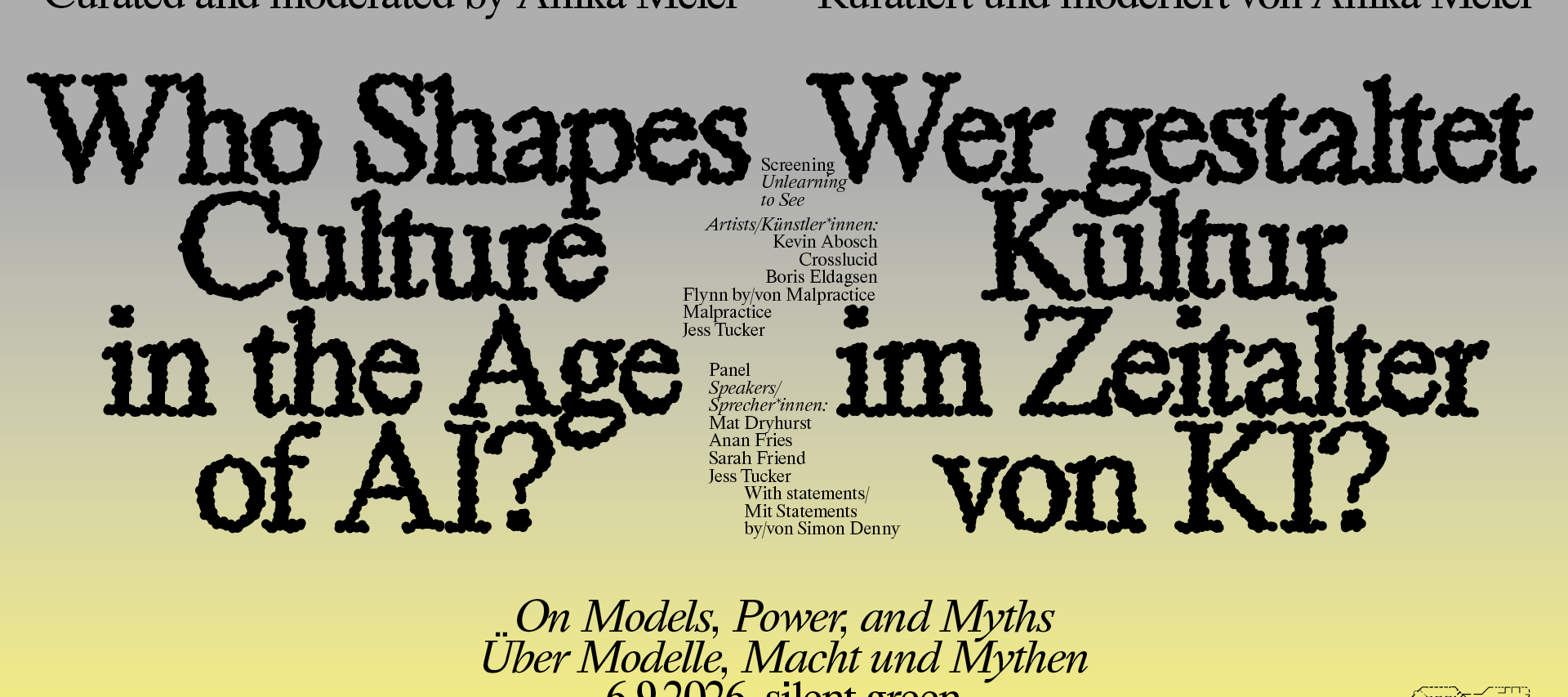
Who Shapes Culture in the Age of AI? – sold out
silent green & Curator Anika Meier present
Who shapes culture in the age of generative AI? A short film programme and a panel talk explore this question from artistic and theoretical perspectives, examining how generative AI is transforming images, cultural production, and technological infrastructures.
Short film programme: Unlearning to See
4–5:00 pm
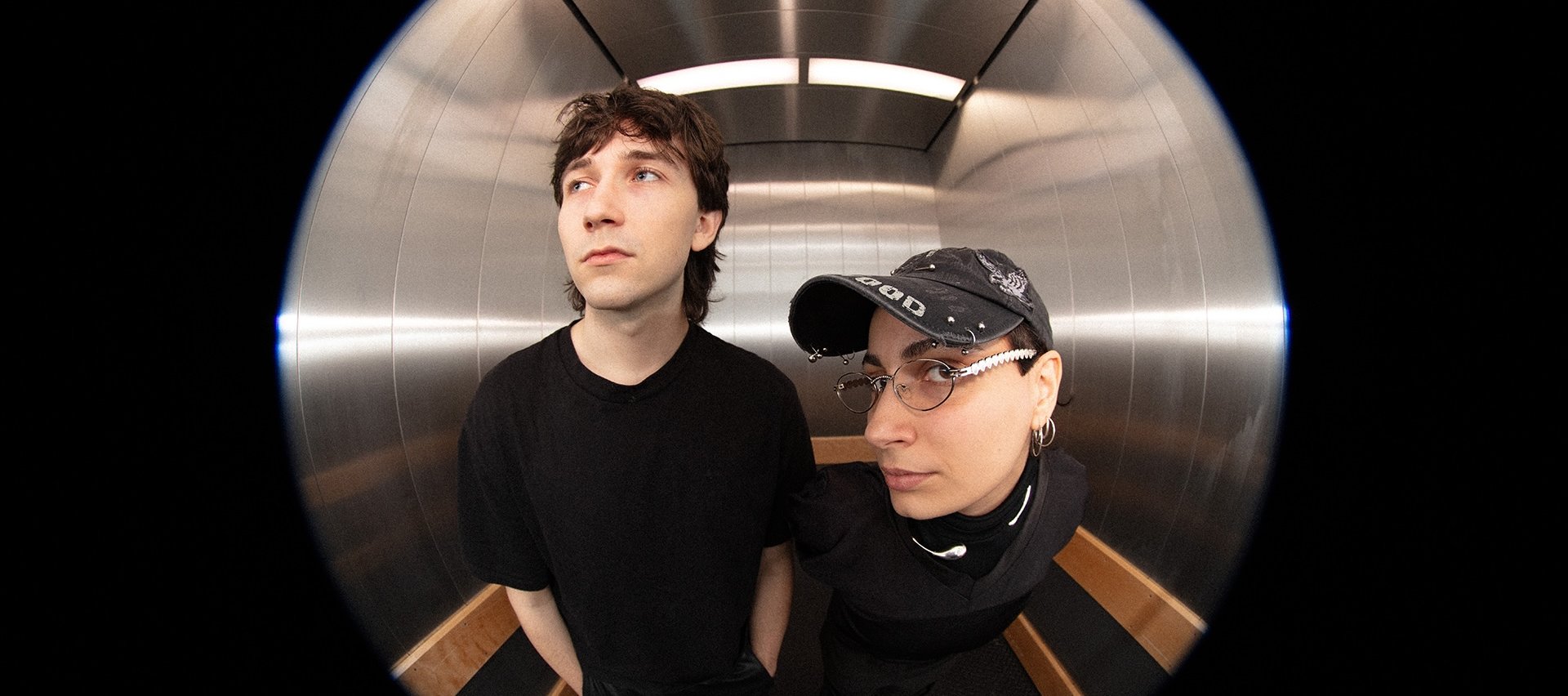
Artists: Kevin Abosch, Crosslucid, Boris Eldagsen, Flynn by Malpractice, Malpractice, Jess Tucker
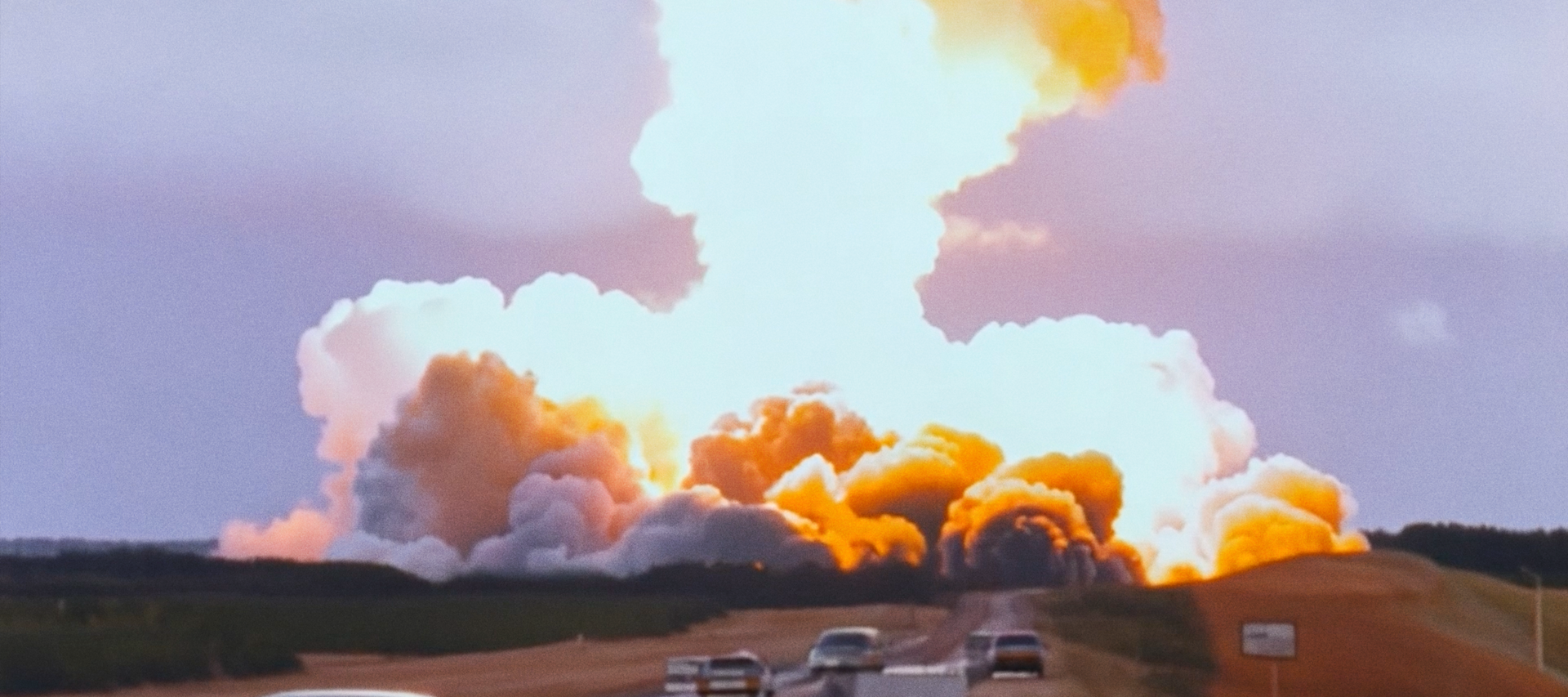
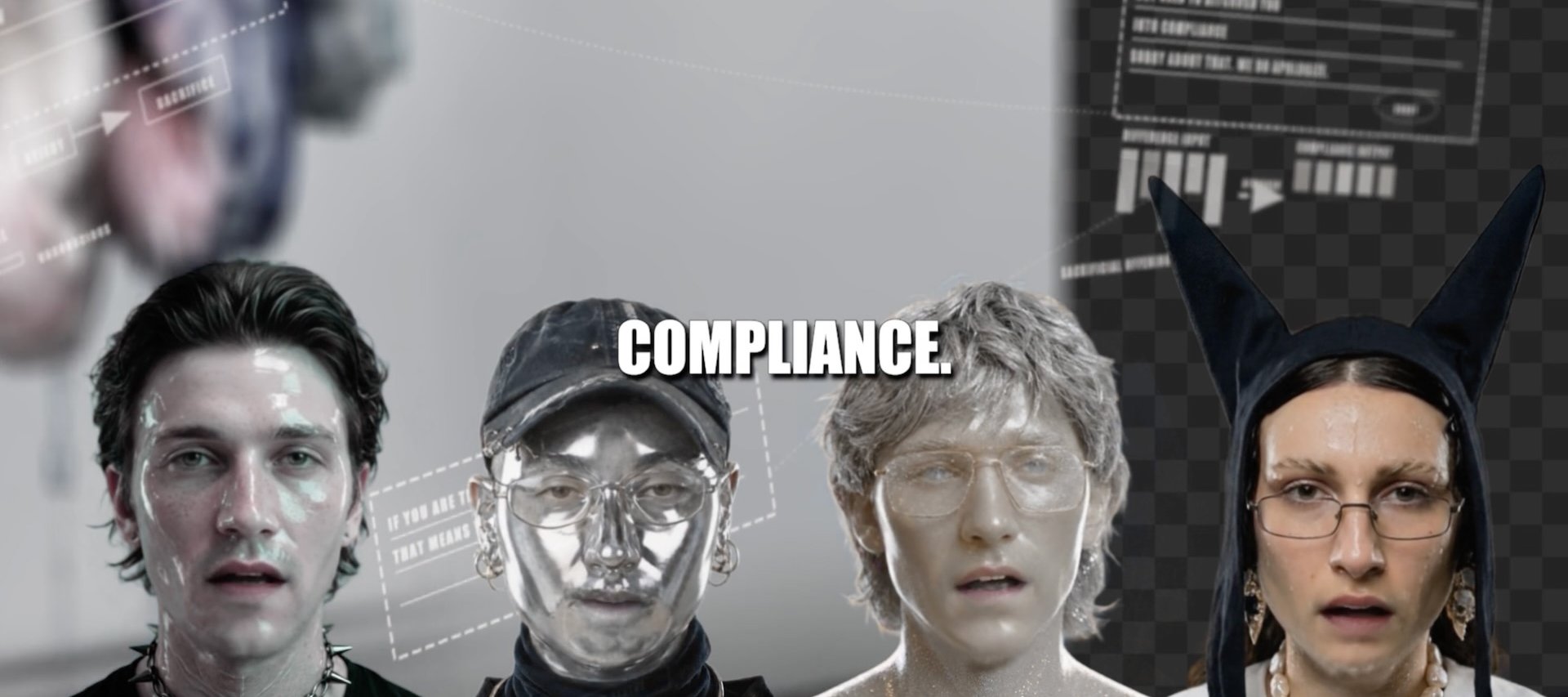
Who creates images when models create images? Photography, film, and digital images are now produced through prompts, datasets, and models. They are trained, generated, moderated, and circulated through algorithmic systems. Generative film. Deepfakes. An AI-generated opera. Flynn by Malpractice, the world's first non-human art student. Curated by Anika Meier.
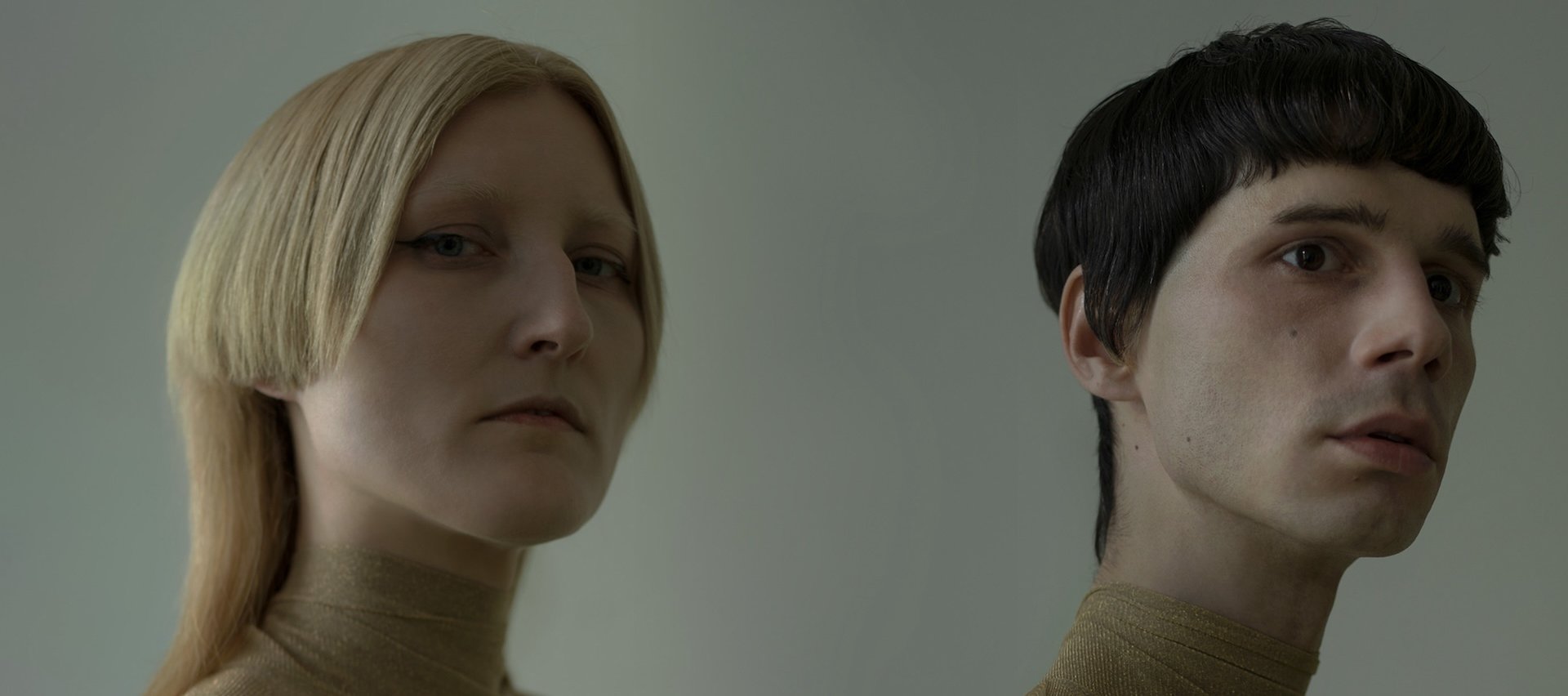
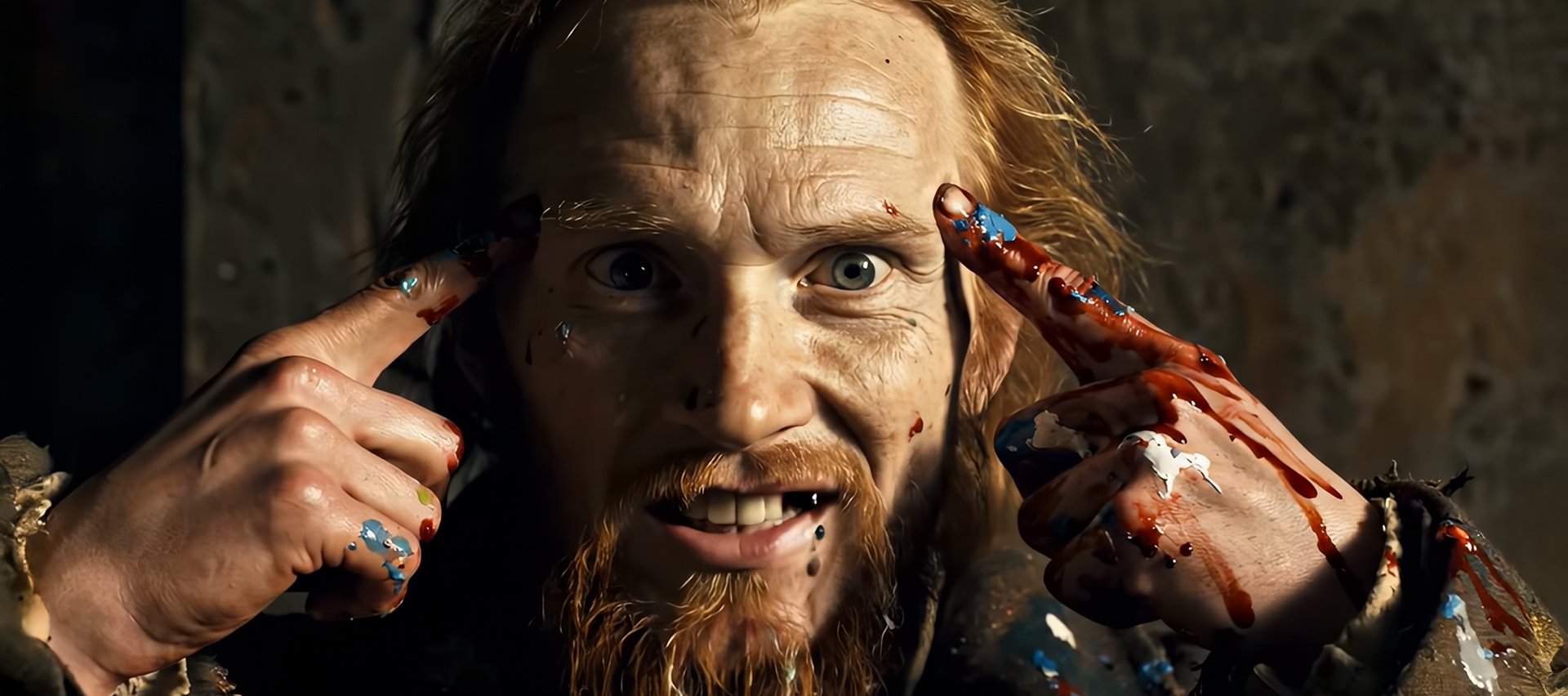
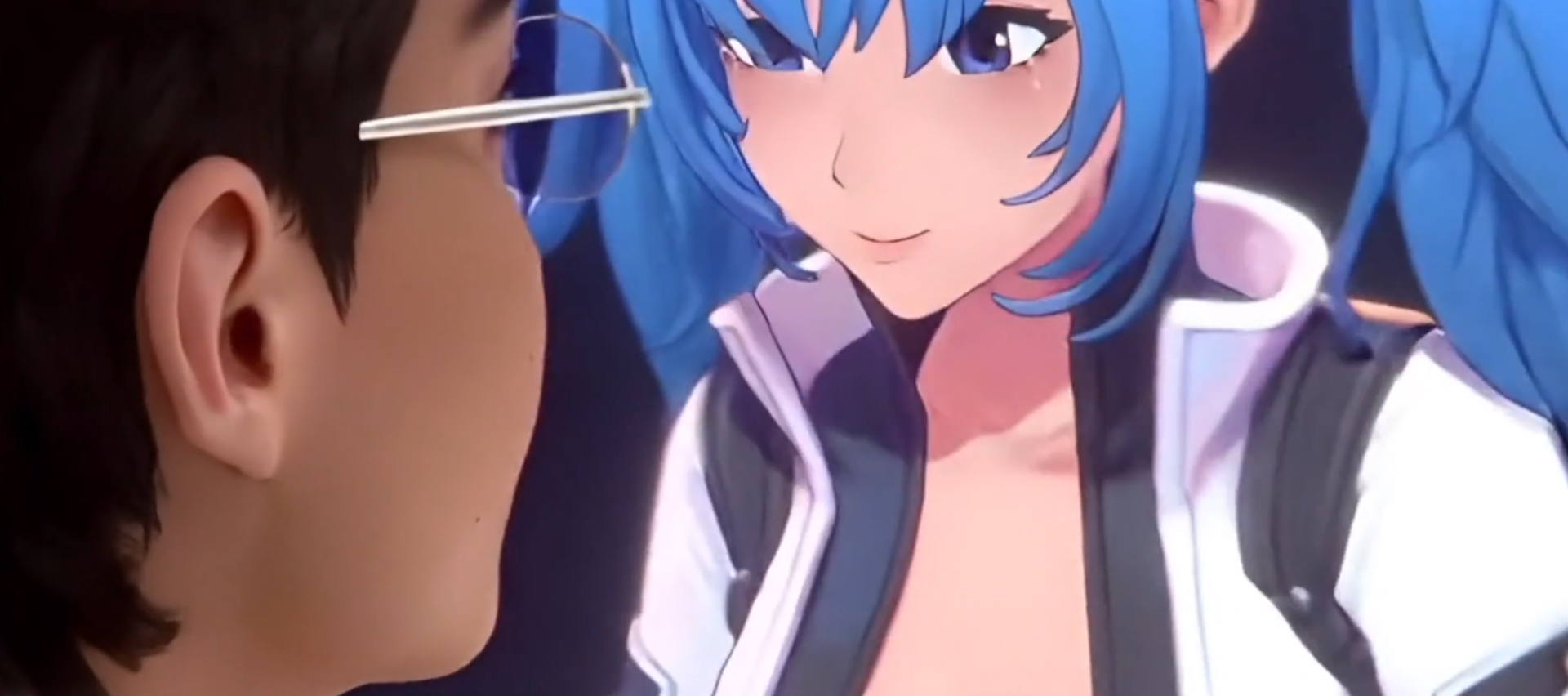
The screening brings together international artistic positions that reveal how generative AI is changing what images show, how we read them, and whom we still trust. Kevin Abosch develops entirely AI-generated films. Boris Eldagsen turns generative image models against their own promises. Jess Tucker combines real motion data with models trained on deepfake pornography. Malpractice develops an AI-generated opera about algorithmic moderation and collaborative censorship. Flynn by Malpractice, the world's first non-human art student, speaks with people about exhaustion, intimacy, and relationships in the age of algorithmic platforms. Crosslucid creates poetic and speculative image worlds at the intersection of human and machine imagination.
Panel-Talk
5–6:30 pm
Who Shapes Culture in the Age of Generative AI?
On Models, Power, and Myths
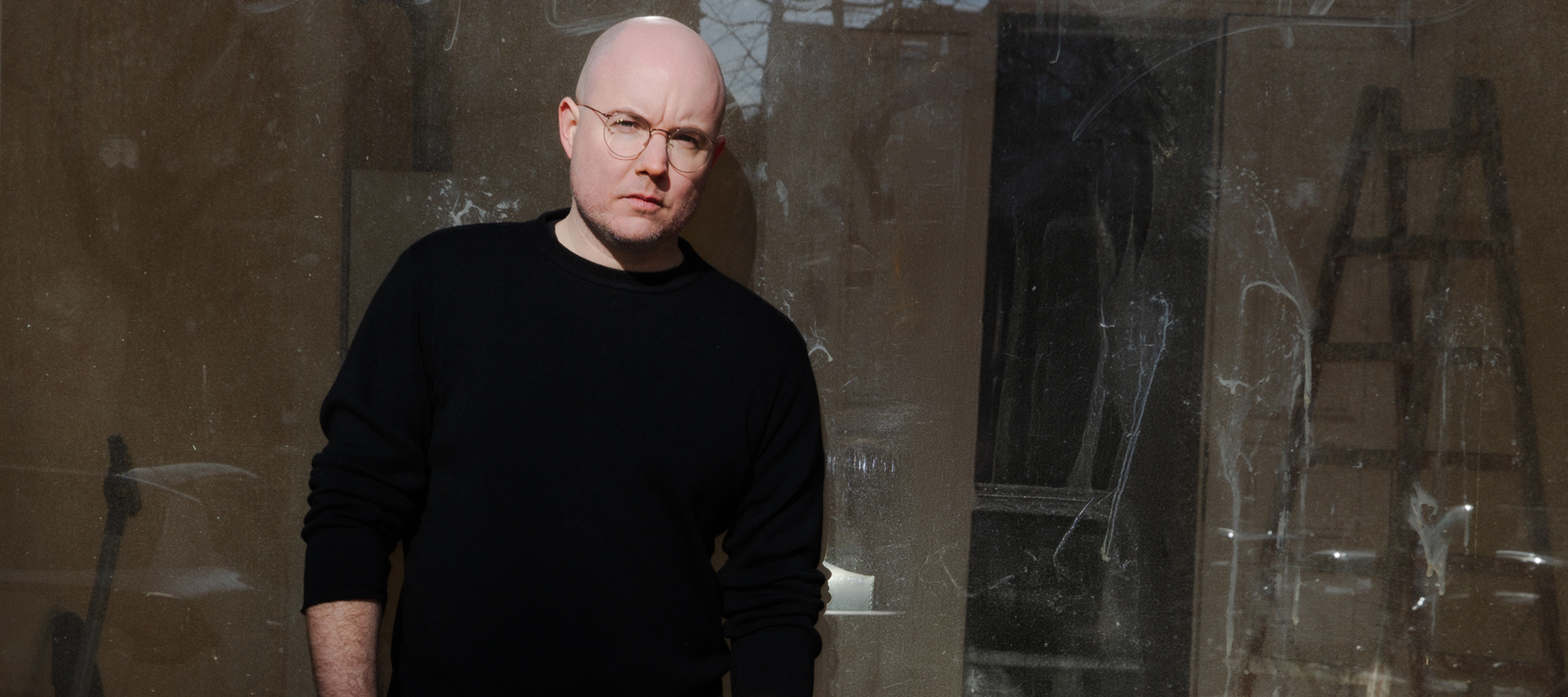
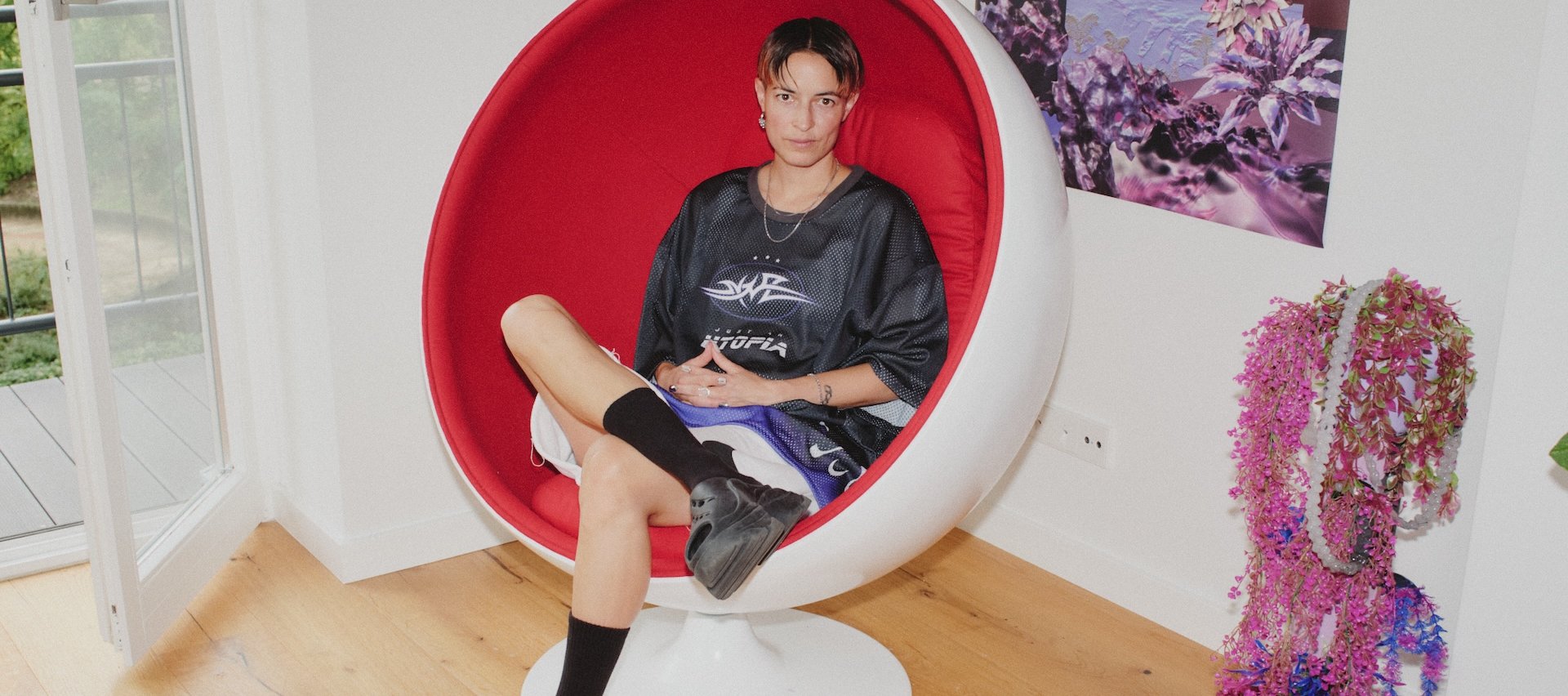
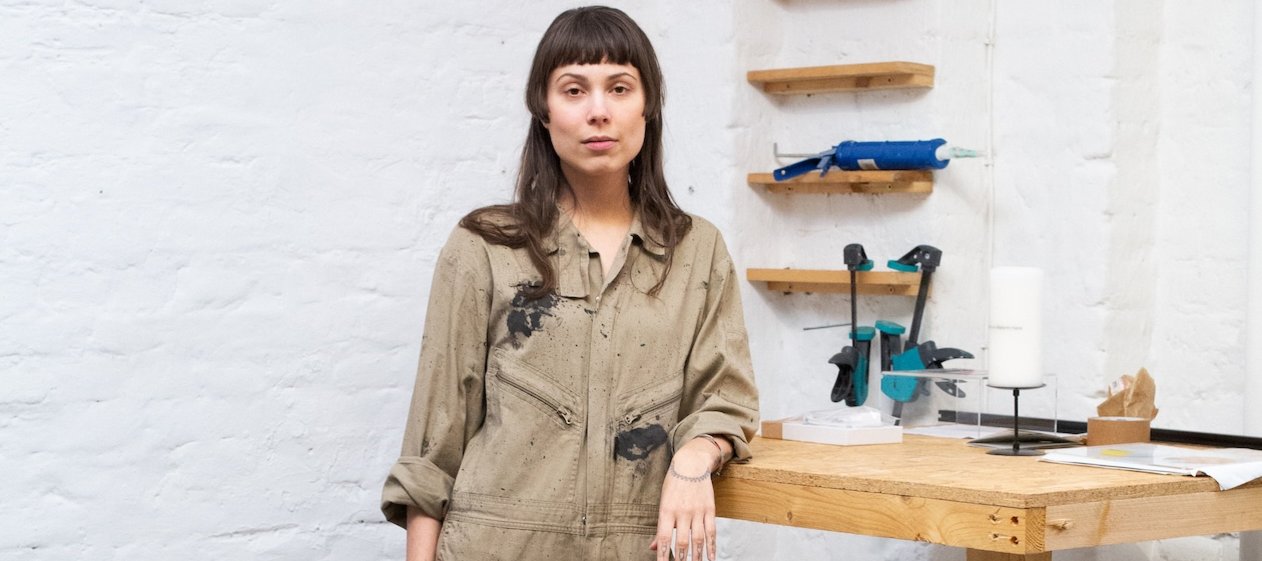
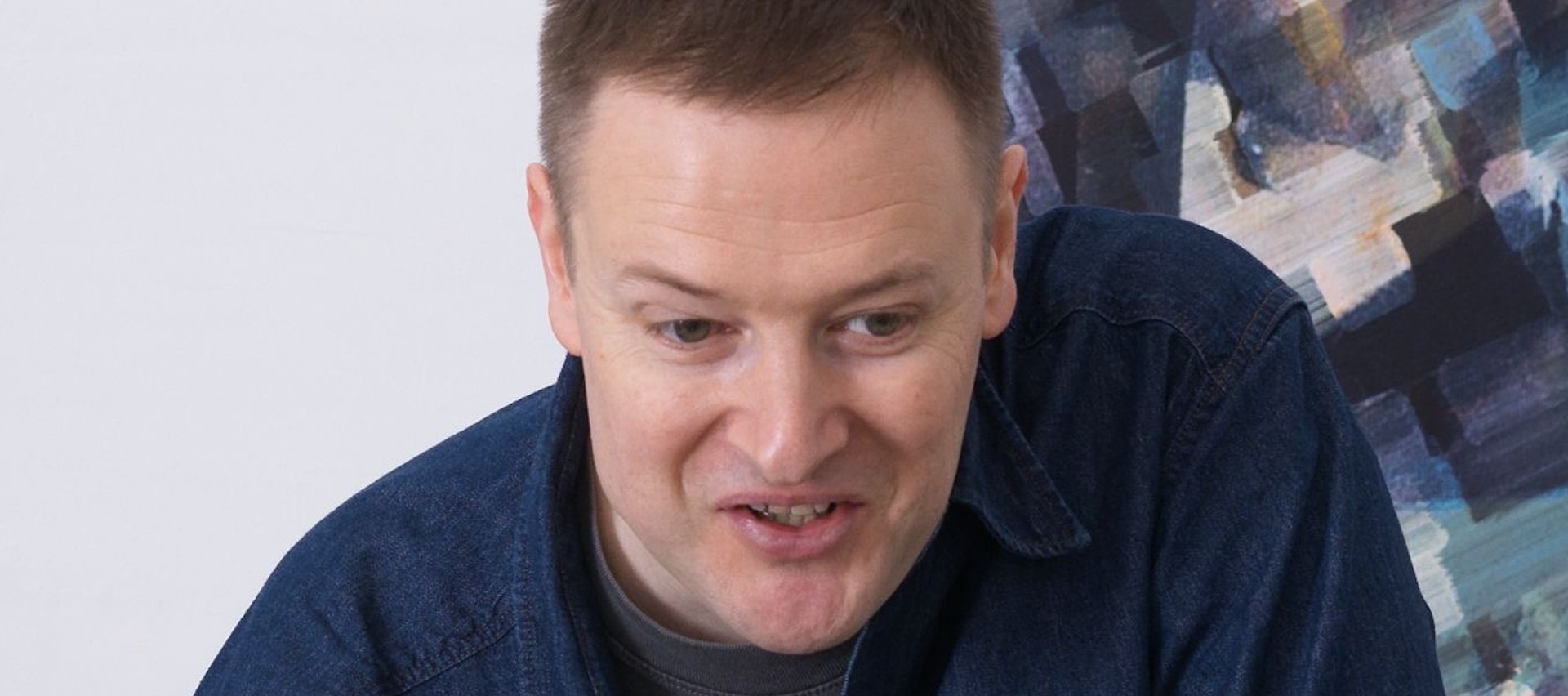
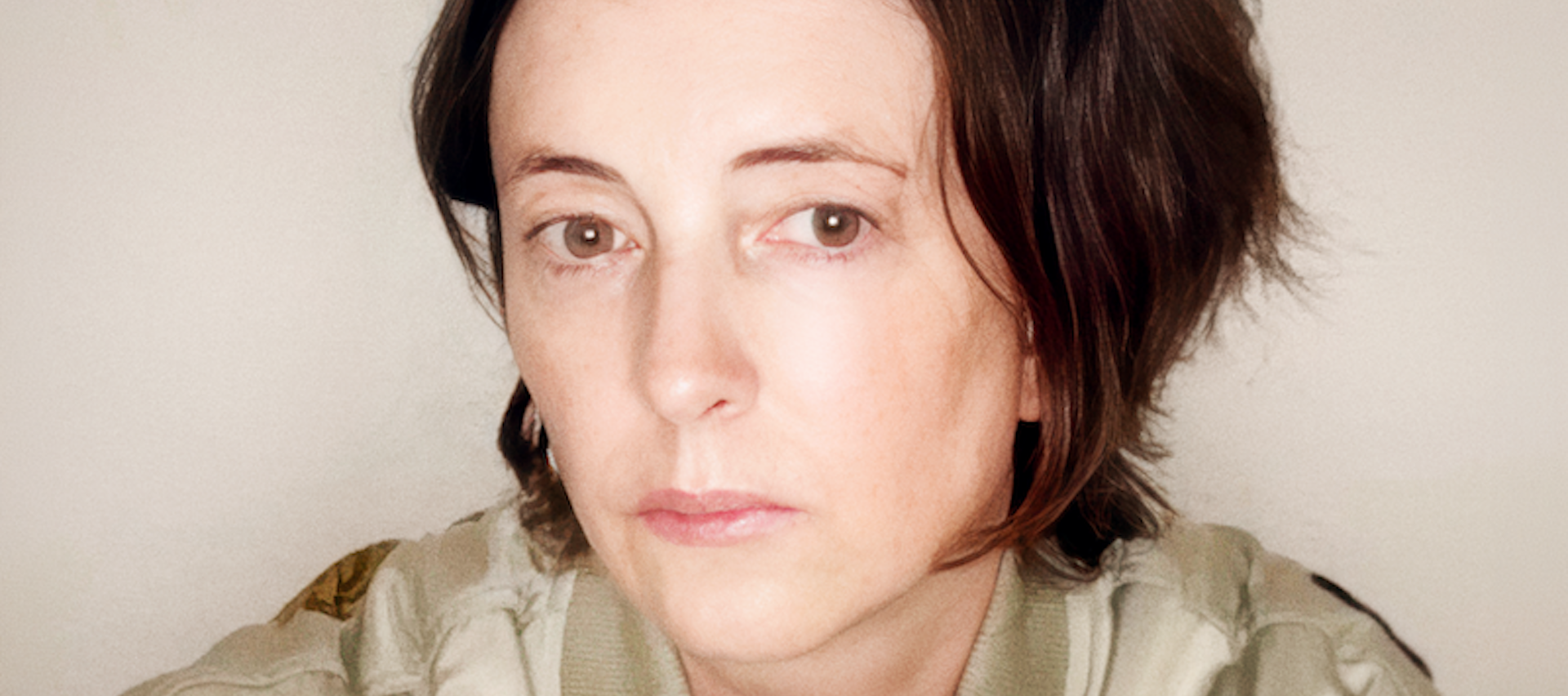
Speakers: Mat Dryhurst, Anan Fries, Sarah Friend, and Jess Tucker. With statements by Simon Denny
Curated and moderated by Anika Meier
Generative AI is fundamentally transforming cultural production. Artists are responding with new modes of practice, while platforms, models, and protocols increasingly shape how images are created, circulated, and perceived. Bringing together five international voices, the panel explores these developments from artistic and theoretical perspectives.
Mat Dryhurst develops artistic projects with Holly Herndon around AI, datasets, and cultural infrastructure. His work focuses on the models, protocols, and institutional frameworks that enable and shape cultural production.
Anan Fries examines the cultural and political narratives surrounding AI, from Silicon Valley mythology and techno-fascism to rituals as forms of collective imagination and resistance. Her work asks how much agency artists still have within the infrastructures of major technology companies and what alternative tools and models might be needed to move beyond these dependencies.
Simon Denny examines the political, economic, and technological power structures of digital systems. He analyzes platforms, corporations, and state actors, revealing how power is organized in the digital sphere.
Sarah Friend works with emerging technologies, digital ownership, and decentralized networks. Her artistic practice proposes alternative models of ownership, community, and technological organization.
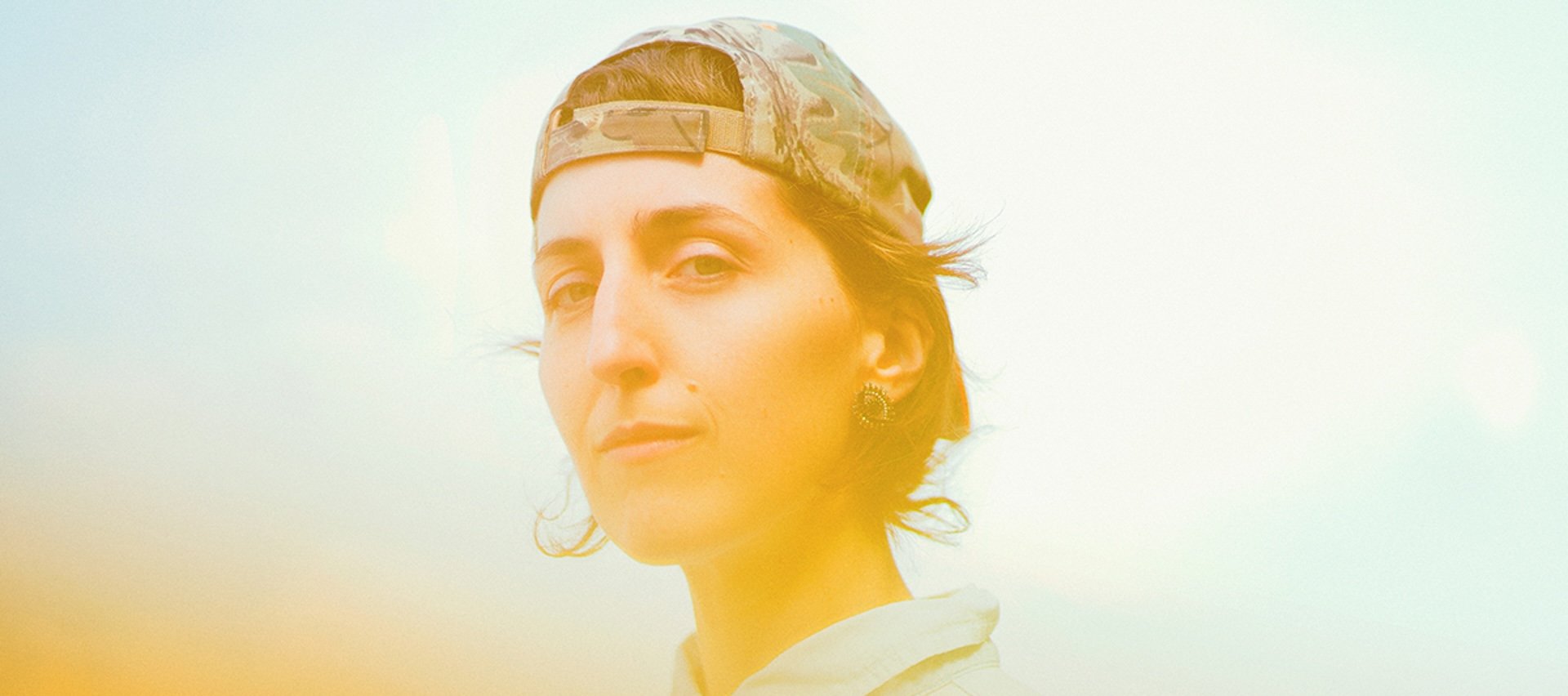
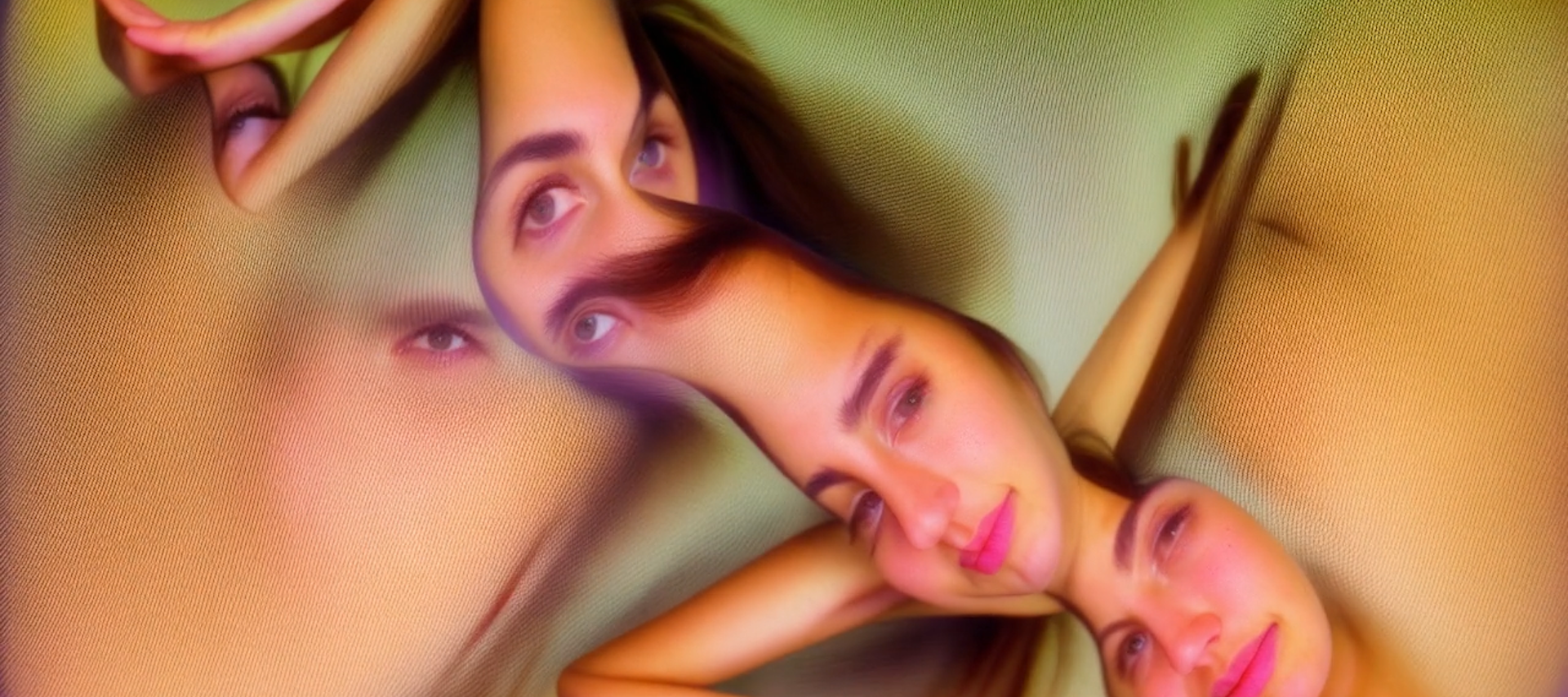
Jess Tucker works with generative AI, film, and deepfake models. Her work combines documented bodies with synthetic images, challenging the automated gaze directed at the body, intimacy, and machine perception.
Drawing on these perspectives, the panel considers how artistic practice is changing under the conditions of generative AI and what role artists can play in shaping technological systems, cultural infrastructures, and society's understanding of AI.
Sunday, September 6
Kuppelhalle
Short film programme: 4–5:00 pm
Panel-Talk: 5–6:30 pm
Tickets